Neonatal Hypoglycaemic Encephalopathy
Written and reviewed by RadLearn editorial team · Updated 21 Oct 2026
Figures (9)
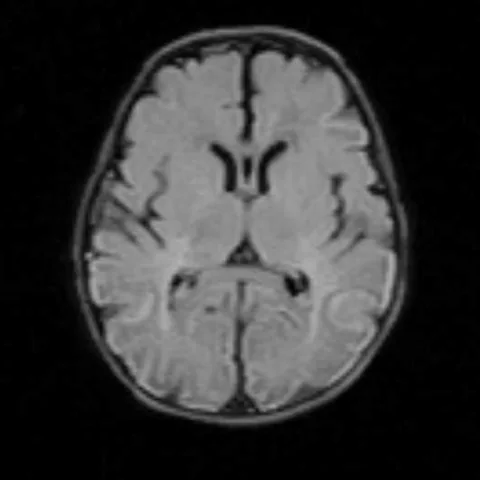
Patient history
History: 8-day-old preterm female neonate presenting with poor feeding and seizures for 3 days. Blood glucose levels within 48 hours of admission were –15, 10, 15, 12, 10, 15 and 20 mg/dl.
Imaging findings — key points
- Neonatal hypoglycaemic encephalopathy is a metabolic brain injury of the newborn.
- Preterm infants and infants of diabetic mothers are at particular risk.
- Presentation may include poor feeding and seizures.
- Hypoglycaemia is documented by serial blood glucose measurement.
- MRI is the imaging modality of choice for assessment.
- Hypoxic-ischaemic injury and PRES are important differential considerations.
Discussion
This case illustrates neonatal hypoglycaemic encephalopathy, a metabolic brain injury occurring in the newborn period, with preterm infants among those at risk. The clinical picture of poor feeding and seizures over 3 days, together with serial blood glucose levels as low as –15 mg/dl, prompted MRI. The imaging diagnosis was neonatal hypoglycaemic encephalopathy, and the case analysis also raised hypoxic-ischaemic injury and posterior reversible encephalopathy syndrome (PRES) as considerations. The teaching value lies in recognising hypoglycaemia as a cause of neonatal encephalopathy and in distinguishing it from hypoxic-ischaemic injury and PRES. Pitfalls include attributing seizures solely to a structural or epileptic cause without checking glucose. Management implication: prompt recognition and correction of hypoglycaemia are essential to limit brain injury.
Differential diagnosis
| Alternative diagnosis | Key features that distinguish it from this case |
|---|---|
| Hypoxic-ischaemic injury | May produce overlapping imaging appearances; the documented hypoglycaemia supports a metabolic rather than purely hypoxic cause. |
| Posterior reversible encephalopathy syndrome (PRES) | Considered in the case analysis; typically shows posterior-predominant change rather than the pattern of hypoglycaemic injury. |
| Neonatal seizure-related change | Seizures were present, but the recurrent low glucose levels point to hypoglycaemia as the underlying insult. |
The confirmed diagnosis itself is not included as an alternative — it is stated separately below.